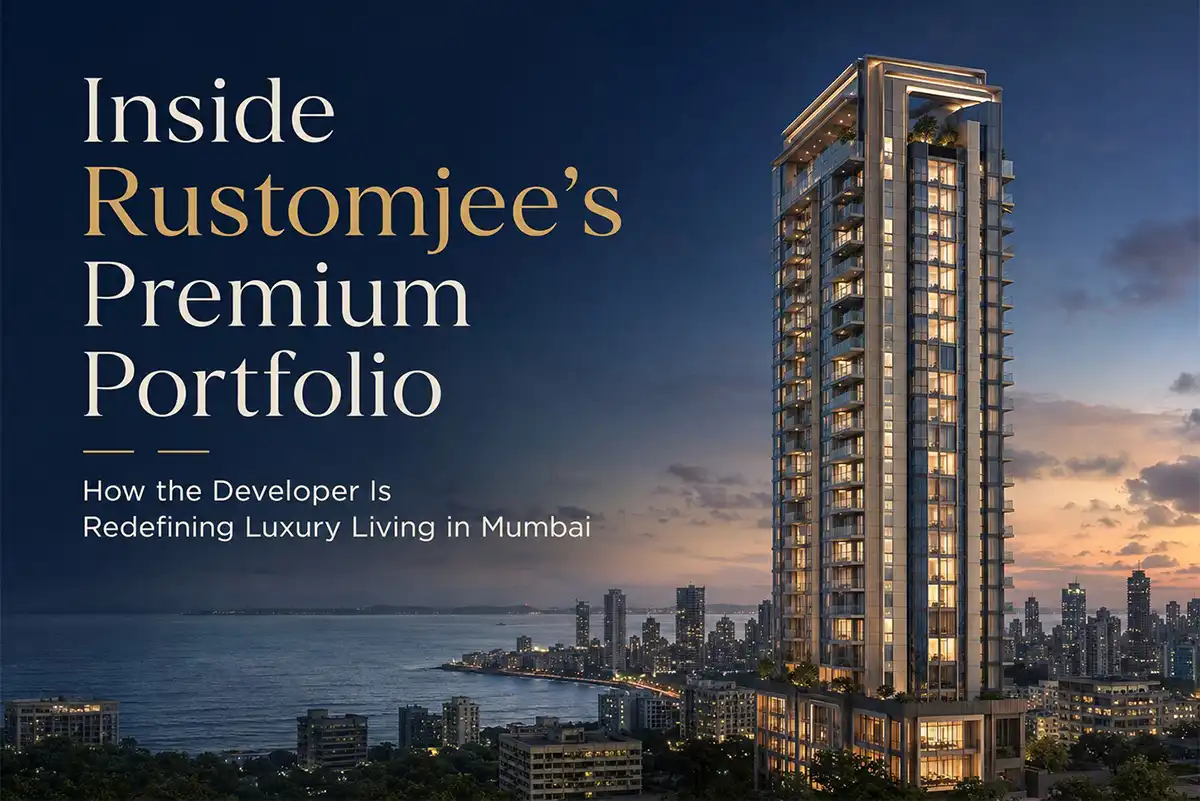
Inside Rustomjee’s Premium Portfolio: How the Developer Is Redefining Luxury Living in Mumbai
An independent Gupta & Sen assessment of its luxury projects, redevelopment franchise, architecture and investment outlook.
1. Executive Summary
Who is Rustomjee?
Rustomjee is the residential brand of Keystone Realtors Limited, a publicly listed Mumbai real estate developer founded in 1996 by Boman Rustom Irani. Over nearly three decades, the company reports having delivered more than 25 million sq. ft. of real estate across Mumbai, housed 12,300+ families, and built a pipeline exceeding 42 million sq. ft. It trades on both the NSE and BSE under the ticker RUSTOMJEE, with a market capitalization of approximately ₹5,100 crore as of mid-2026.
Why does this company matter?
Rustomjee’s portfolio spans a wide price range within a single brand, from roughly ₹38 lakh in Virar to ₹130 crore in Bandra. In our assessment, this breadth, a first-generation buyer in the suburbs and an ultra-high-net-worth buyer at Bandra Bandstand under one brand umbrella, is unusual among Mumbai developers of comparable scale and is one reason the company merits closer study.
What makes its portfolio distinctive?
In Gupta & Sen’s assessment, three characteristics separate Rustomjee from comparable developers. First, a design approach that leans toward restraint and functionality over overt display. Second, a concentrated micro-market strategy, the company operates exclusively within Mumbai rather than pursuing pan-India scale. Third, a redevelopment business that has, by deal count, become one of the more active in the MMR, built on transition support and a delivery record that we believe compares favourably with peers, though we have not independently audited default rates across the industry.
Rustomjee Premium Tier Key findings
Rustomjee’s premium tier (projects above ₹8 crore) now accounts for the majority of its revenue and, in our view, most of its brand-value creation.
- The Bandra cluster (Cama, Cliff Tower, Parishram, Panorama, Crescent) represents, by our count, one of the most concentrated ultra-luxury pipelines any single Mumbai developer has assembled in one micro-market; we have not independently verified this against every competitor’s undisclosed pipeline.
- Redevelopment GDV won in FY2025 alone exceeded ₹10,000 crore across announced mandates, positioning the company among the more prolific redevelopment winners in MMR by deal count.
- Ranked 13th nationally by pre-sales in FY2025 at ₹3,028 crore, a revenue base considerably smaller than Lodha or Prestige, discussed further in Section 11.
- The launch of Rustomjee Cama at ₹130 crore per unit places the project among Mumbai’s higher-priced residential launches, by our reading of comparable recent transactions.
Why this matters: In our view, Rustomjee is transitioning from a suburban developer with luxury aspirations toward an ultra-luxury developer underpinned by a suburban revenue base. We think this combination gives the brand more financial ballast than a pure-play luxury developer, though it is not without execution risk, addressed in Section 13.
What we think investors should watch: The pace of Cama sales and absorption at Cliff Tower will, in our opinion, be an early signal of whether Rustomjee can sustain pricing at the ₹1 lakh per sq. ft. level over multiple projects rather than a single launch.
2. Rustomjee Company Evolution
A company-disclosed timeline of Rustomjee’s growth, from its 1996 founding to its current ultra-luxury positioning, is presented separately as an infographic accompanying this report. The narrative below summarises the key phases.
1995–1996 | Rustomjee Foundation
Keystone Realtors was incorporated in 1995; the Rustomjee brand was launched in 1996 by Boman Rustom Irani, a first-generation developer with roots in Mumbai’s contractor community. The founding philosophy, “ideas are the cornerstones of buildings, bricks and mortar merely the tools,” was, by the company’s own account, a departure from the price-led competition typical of that era.
1996–2005 | Rustomjee Suburban Origins
The group established itself in Mumbai’s western suburbs, developing mid-income residential projects in Borivali, Kandivali, Thane, and Virar. According to company materials, this period built a reputation for on-time delivery and quality construction; we have not independently audited delivery timelines from this era.
2006–2012 | Township Ambition
Rustomjee launched its two flagship townships, Urbania in Thane and Global City in Virar, positioning itself as a master-planned community developer. Urbania is, in our assessment, a reasonably well-regarded reference point in MMR for integrated township living.
2013–2018 | The Premium Pivot
The group moved upmarket. Rustomjee Crown in Prabhadevi, a 5.75-acre gated estate with 66+ amenities across three towers, marked a clear shift toward luxury positioning. Rustomjee Elements in Juhu followed, designed by Hong Kong architect James Law Cybertecture, with interior collaborations credited to Susanne Khan and Jimmy Mistry.
2019–2021 | Rustomje’s Design Partnerships Deepen
The group formalised a design-partnership model: Singapore-based COEN for landscaping at Parishram and Panorama, RSP Architects for building design, UHA for structural work, and Sanjay Puri for Ashiana and Cliff Tower. Each luxury project now carries a named architect of record.
2022 | Rustomjee IPO
Keystone Realtors listed on NSE and BSE on 24 November 2022. The listing brought a formal governance and disclosure framework, which we view as a meaningful, verifiable credibility signal, separate from any marketing narrative.
2023–2025 | Rustomjee Bandra Concentration
Rustomjee launched Parishram, Panorama, Cliff Tower, and Cama, four ultra-luxury projects in Bandra West within roughly 36 months. Pre-sales for FY2025 reached ₹3,028 crore; announced redevelopment GDV wins exceeded ₹10,000 crore in the same year.
Ultra-Luxury Launch Cadence
2026 | Rustomjee The Present
A second major redevelopment mandate in Andheri West (₹3,000 crore GDV) was secured alongside the GTB Nagar MHADA win (₹4,521 crore). Rustomjee Cama launched at ₹130 crore per unit. The group reports operating 12 projects, with 26 in planning.
Why this matters: In our reading, the Rustomjee story is a case of gradual, deliberate brand migration, from Virar to Bandstand over roughly three decades, without visibly abandoning the suburban base that funds the journey. We think this is harder to execute than it appears; many developers attempting a similar move upmarket lose their original customer base without fully capturing HNI demand.
Question worth asking: Whether the post-IPO capital discipline accelerates further luxury launches, or whether the redevelopment pipeline creates construction-bandwidth constraints that slow both tracks simultaneously. We do not think this question is yet resolved by public data.
3. The Rustomjee Philosophy
The following principles recur across Rustomjee’s portfolio at multiple price points. We present them as the company’s own stated design philosophy, supplemented by our observations from delivered projects, rather than as independently verified universal truths.
Principle 1: Design Thinking, Not Design Decoration
At Elements in Juhu, the company engaged James Law of Cybertecture to rework the relationship between apartment layouts and natural light rather than simply add an unusual facade. At 180 Bayview in Matunga, the project is described in company materials as being co-created by architects, landscape designers, environmentalists, and child psychologists among others. We regard this as a genuine multidisciplinary process based on the delivered projects we have reviewed, though the specific claim of psychologist involvement is sourced to company materials rather than independently verified.
Principle 2: Density as a Luxury
In a dense city, Rustomjee’s most consistent point of differentiation is space between units, not only within them: two residences per floor at Panorama, three at Parishram, Ashiana, and Crown, and 37 homes across the entirety of Cliff Tower. In our view, this low-density model is a genuine architectural choice with cost implications, not merely a marketing claim, since it directly reduces saleable density relative to FSI available.
Principle 3: Family-Oriented Planning
Rustomjee’s luxury projects consistently integrate children’s play areas, senior citizen zones, and community lawns. The brand’s tagline, “Life shouldn’t be lived in square feet,” is marketing language, but the underlying design choices, evident in delivered projects such as Crown, are, in our assessment, consistent with the stated intent rather than purely aspirational copy.
Principle 4: Environmental Measures
Rainwater harvesting, solid waste management, sewage treatment plants, solar lighting, and energy-efficient VRV air-conditioning appear across the portfolio, from affordable projects in Virar to ultra-luxury homes in Bandra. These are standard measures increasingly common across the Mumbai development industry rather than a distinguishing feature unique to Rustomjee, though their consistent presence across price points is notable.
Principle 5: Redevelopment as Community Engagement
When Rustomjee undertakes a housing society redevelopment, the company states that it provides transition support, temporary accommodation assistance, and preserves community elements such as places of worship. This approach carries a higher cost to the developer and is, in our view, the most credible explanation for Rustomjee’s comparatively strong win rate in competitive redevelopment tenders, discussed further in Section 6.
Principle 6: Named Architects
Every premium project carries the name of its architect and landscape designer, allowing buyers to research design credentials independently. We view this as a meaningful accountability mechanism, though it does not by itself guarantee construction quality or timely delivery.
Why this matters: Rustomjee’s stated design philosophy is, in several cases we reviewed, verifiable by visiting delivered projects, Crown has been occupied for several years and appears to have held up structurally, and the landscape at Elements has matured. We regard this as a reasonable basis for confidence, though it is not a substitute for a buyer’s own site visit and independent due diligence.
Our view: The family-centric design approach may be one of the brand’s more durable differentiators in the HNI segment, where buyers increasingly include multiple generations under one roof. This is our interpretation of the pattern we observe, not a claim the company itself makes explicitly.
4. Rustomjee Mumbai Portfolio
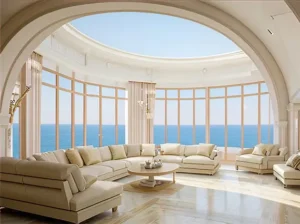
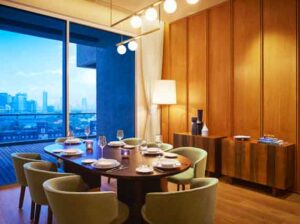
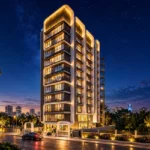
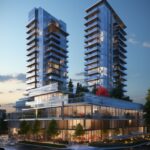
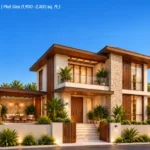
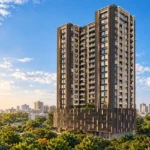
Note: project renderings referenced in the original source materials are AI-generated and illustrative; they should not be relied upon as accurate depictions of the delivered product.
Bandra West — The Crown Cluster
Bandra West is, in our assessment, Rustomjee’s most strategically significant micro-market bet. The concentration of five projects here is, based on our review of public project data, unusual for a single developer in one micro-market, though we have not exhaustively verified every competitor’s undisclosed land bank.
Rustomjee Cama — Bandstand Promenade | 5 BHK | ₹130 Cr+ | New Launch 2025
Sea-facing residences of 6,500 sq. ft. on the Bandstand Promenade, adjacent to Taj Lands End. GDV approximately ₹3,000 crore. Single tower, limited boutique inventory. RERA PR1180002501131. Possession scheduled January 2030.
Rustomjee Cliff Tower — Mount Mary, Bandra West | 4, 5, 6 BHK | ₹38–65 Cr | Launched May 2025
Sited on a natural cliff with reported 270° sea views. 37 residences, two per floor, in a 4B+G+26 storey structure. Architecture by Sanjay Puri (SP&A), interiors by Patty Mak (Singapore), landscaping by Kunal Maniar. Starting price ₹40.77 crore. Possession scheduled October 2030. RERA P51800080156.
The Panorama by Rustomjee — Pali Hill, Bandra West | 4 & 5 BHK | ₹32–45 Cr | Launched Feb 2024
14-storey tower, 25 units, two per floor. Architecture by RSP Architects; landscape by COEN Singapore. Every residence includes a private sundeck. Average price reported at ₹1.2 lakh/sq. ft. as of Q4 FY2025, which the developer states is 45% above the Pali Hill micro-market average, a figure we have not independently benchmarked. RERA P51800054920. Possession October 2028.
Rustomjee Parishram — Pali Hill, Bandra West | 3, 4 & 5 BHK + Penthouse | ₹16–82.5 Cr | Ready Jan 2026
20-storey tower, 21 units, three per floor. Architecture by UHA; landscape by COEN Singapore. Reported quarter-on-quarter price appreciation of 36% in Q3 FY2025 to ₹1.17 lakh/sq. ft., based on transaction data cited by the developer. Penthouse priced at ₹82.5 crore. RERA P51800033333.
Rustomjee Crescent — Pali Hill, Bandra West | 3 & 4 BHK + Jodi | Price on request | New Launch
Two wings, 18 storeys, on a 1.2-acre plot, with a 55-metre rooftop pool. A comparatively lower entry ticket into the Pali Hill address than Parishram or Panorama.
Juhu–Versova Belt
Rustomjee Elita — Off Juhu Circle | 3, 4 & 5 BHK | ₹6.84 Cr+ | Ready to Move
1.25 acres, 15 storeys. Architecture by Sanjay Puri; interiors credited to Susanne Khan, Simone Arora, and Jimmy Mistry across unit types. Reported average price growth of 34.6% in Q2 FY2025.
Rustomjee Elements — Off Juhu Circle | 3, 4 & 5 BHK | ₹10.9–24 Cr | Sold out / resale
5-acre estate designed by James Law of Cybertecture (Hong Kong), with a 40,000 sq. ft. themed podium. Now trading primarily in the secondary market.
Rustomjee Ashiana — 10th Road, Juhu | 3 & 4 BHK | ₹8.75–11.45 Cr | Possession Feb 2027
27-unit boutique building, three per floor, terracotta brick-clad facade by RSP Architects. Average price reported at ₹67,200–75,300/sq. ft. RERA P51800049755.
Rustomjee Ocean Vista — Versova, Andheri West | 4 & 5 BHK | ₹22 Cr+ | Under construction
Direct beachfront positioning; 52 units across a single 24-storey tower. In our assessment this is a comparatively rare beachfront product for the Versova micro-market, which has historically had limited premium supply. RERA P51800076673. Possession December 2027.
South and Central Mumbai
Rustomjee Crown — Prabhadevi | 3, 4 & 5 BHK | ₹9.67–17.1 Cr | OC received (Phase 1)
5.75-acre gated estate; 60+ registered transactions totalling a reported ₹629 crore. Prabhadevi’s broader micro-market average is cited at ₹47,994/sq. ft. with 7.88% annual appreciation over five years per the sources used in this report.
Rustomjee 180 Bayview — Matunga West | 2, 3 & 4 BHK + Duplex | ₹3.85–7.88 Cr | Possession 2028–29
1.5 acres, two towers, 37 floors, 102 units, with sea views from most apartments. GDV approximately ₹1,300 crore.
BKC Annexe
Rustomjee Seasons | 3 BHK | Ready to move
A delivered project in the BKC adjacency that received OC and, per the developer, multiple industry awards including a Best Redevelopment Project recognition in 2020.
Rustomjee Aden | 3 BHK | Newly launched
A follow-on product in the same micro-market, targeting the ₹4–5 crore segment.
Why this matters: The portfolio spans from roughly ₹3.85 crore in Matunga to ₹130 crore in Bandstand, all within MMR and under one brand. Based on our review, this range is wide relative to peers of comparable size, though we have not conducted a formal cross-developer audit of every competitor’s full price range.
Our view: The Juhu–Versova cluster looks, to us, like the highest-appreciation story within the current portfolio, and Ocean Vista in particular occupies a location that has not previously had a comparable luxury product. This is our interpretation, not a guarantee of future price performance.
5. Rustomjee Signature Projects
Why this matters: These six projects together represent a pipeline of approximately ₹8,000–10,000 crore in GDV, by our estimate. All six sit in micro-markets with structural supply constraints, Bandstand, Pali Hill, Mount Mary, Versova seafront, and Prabhadevi, which in our view is a deliberate site-selection strategy rather than coincidence.
Our view on holding period: We would frame each of these as a long-hold proposition rather than a short-term trade; a 7–10 year horizon seems more consistent with the infrastructure and supply-constraint thesis than a shorter one. This is our judgment, not investment advice, and individual circumstances vary.
6. Rustomjee’s Redevelopment Strategy
Why this matters: Over the next decade, we expect redevelopment to account for a substantial share of new residential supply in Mumbai, given the scarcity of greenfield land in prime micro-markets; this is a widely held industry view, not unique to Gupta & Sen. In our assessment, a developer with strong community trust and deal-execution capability, such as Rustomjee appears to have built, is well positioned for this shift, though execution risk on such a large pipeline is meaningful, addressed further in Section 13.
Question worth watching: Whether Rustomjee begins winning cluster redevelopment mandates in South Mumbai proper, where per-sq.-ft. economics are highest, remains, in our view, an open question rather than a settled trend.
7. Rustomjee Land Bank Analysis
Rustomjee’s land bank is concentrated within Greater Mumbai and its immediate suburbs. Unlike Lodha, Prestige, or Godrej, which have expanded nationally, Rustomjee’s entire disclosed pipeline sits within MMR, a strategic choice, in our view, rather than a limitation, though it does mean the company’s fortunes are more tightly linked to a single city’s regulatory and pricing cycle than a diversified peer.
-
- Western Suburbs (Core): Andheri, Juhu, Versova, Bandra, Khar, BKC Annexe, Borivali, Kandivali. The original base, now being repositioned toward premium. The redevelopment pipeline in Andheri alone exceeds ₹4,775 crore in GDV by our count.
- South Mumbai (Growing): Prabhadevi (Crown), Matunga (180 Bayview), Dadar, Sion (GTB Nagar). Higher per-sq.-ft. economics, stronger institutional buyer base.
- Bandra West (Ultra-premium): Pali Hill, Bandstand, Mount Mary. Five ultra-luxury projects within roughly 2 km of one another.
- Thane and Virar (Volume base): Urbania, La Famille, La Vie, Global City. These township assets are, in our assessment, the cashflow engine funding the Bandra expansion, though we have not seen segment-level profitability disclosures to confirm this precisely.
- Kasara (New territory): Belle Vue, an 88-acre plotted development, the company’s first foray into plotted development.
- Watch list: Chembur, Mulund, and Navi Mumbai are, in our opinion, plausible next steps given infrastructure tailwinds and Rustomjee’s suburban expertise, but the company has not, to our knowledge, publicly confirmed entry into any of these markets.
Illustrative Allocation of Pipeline GDV by Geography
- Western Suburbs (Core)22%
- Bandra West (Ultra-premium)18%
- South Mumbai12%
- Thane/Virar (Townships)15%
- Redevelopment (new wins, MMR-wide)33%
Why this matters: We view Rustomjee’s MMR-only concentration as a risk-management choice as much as a growth constraint. Staying within one city avoids the execution complexity that has, in our observation, diluted focus at some pan-India developers. The trade-off is single-market concentration risk, discussed in Section 13.
8. Rustomjee’s Luxury Buyer Analysis
Why this matters: Buyer diversity across segments may offer some resilience, if NRI demand softens, domestic buyers could offset it, and vice versa, though this is our inference rather than a tested claim across a full market cycle.
Our view: We think the family-office buyer, allocating a portion of wealth to residential trophy assets, is a segment Rustomjee has not yet explicitly targeted with dedicated outreach, and Cama and Cliff Tower appear well suited to that buyer profile.
9. Rustomjee Architecture — A Closer Look
As a report prepared with architectural training on the research team, this section looks beyond the marketing description to the design decisions themselves.
Facade design
Facades range from the terracotta brick vernacular of Ashiana to the glass-and-steel treatment at Crown to the cliff-face siting of Cliff Tower. In our assessment, the facades are generally contextual to their neighbourhood rather than a repeated generic template, which we take as a reasonable indicator of genuine architectural briefing rather than a purely cosmetic exercise.
Apartment layouts
Layouts we reviewed generally prioritise cross-ventilation and natural light, with corridors separating bedrooms from living areas and windows on at least two sides of major rooms in several projects. This is a meaningful design discipline in a market where FSI-maximising layouts are common, though we have not reviewed every unit type across the portfolio.
Clubhouse and podium planning
Crown’s podium, with seven pools and a range of themed zones across 5.75 acres, is the most extensive in the portfolio. Smaller projects such as Ashiana place amenities like the infinity pool at the top of the building rather than at grade, a choice that we read as prioritising resident experience over construction cost savings.
Landscape architecture
The partnership with COEN (Singapore) at Parishram and Panorama brings a landscape design vocabulary, mature planting plans and water features, that is less commonly available through domestic-only consultants in this price segment, in our assessment.
Construction specifications
Premium projects reportedly include imported marble, Grohe or Kohler fittings, and branded energy-efficient air-conditioning systems. These are specification decisions made at the brief stage; we cannot independently verify installation quality without a site inspection, so this section reflects disclosed specifications rather than an inspection finding.
Our architectural opinion: In our judgment, Rustomjee’s design quality has improved with each successive project generation, Elements (2018) as a design breakthrough, Crown as a scale breakthrough, and Cliff Tower (2025) as what we would describe as a precision breakthrough, a genuinely site-specific response. We have not seen a Rustomjee project achieve significant architectural-award recognition at an international level to date; whether that arrives is, in our view, a fair open question rather than an inevitability.
10. Rustomjee Projects Amenities Analysis
Rather than listing every amenity at every project, we compare across categories that we consider most material to buyer experience. These category “winners” reflect our comparative judgment across the Rustomjee portfolio specifically, not a claim about the wider Mumbai market.
Best clubhouse, in our assessment: Rustomjee Crown
With 66+ amenities across 5.75 acres, including a Ballroom, English Court, and Spa, Crown’s clubhouse is, in our view, in a different scale category from the other projects in the portfolio.
Best wellness offering, in our assessment: Rustomjee Parishram
Meditation zones, a forest walk, and COEN-designed therapeutic landscape spaces support a wellness-oriented brief.
Best children’s amenities, in our assessment: Rustomjee Crown
A dedicated Kids’ Creative Studio and shallow pool with water features stand out relative to the rest of the portfolio.
Best views, in our assessment: Rustomjee Cliff Tower
270° sea views from a natural cliff elevation are, in our view, unmatched elsewhere in the current Rustomjee portfolio.
Most extensive pool offering, in our assessment: Rustomjee Crown
Seven themed pools, including a Lagoon Pool and Jacuzzi Pool, exceed any other project in the portfolio by our count.
Best landscaping, in our assessment: Rustomjee Parishram
COEN Singapore’s floor-level terrace gardens and forest walk represent, in our judgment, the most integrated landscape design in the current portfolio.
Best rooftop experience, in our assessment: Rustomjee Ashiana
A rooftop lounge, café, and outdoor cinema at a boutique 10-storey scale make this, in our view, the most usable rooftop in the portfolio.
Implication for buyers: Crown and Parishram lead the portfolio on amenities by our count. If wellness and multi-generational family living are priorities, Crown; if design-forward amenity experience in an exclusive setting is the priority, Parishram.
A gap we note: Co-working and private meeting facilities are largely absent from the amenity catalogue across the portfolio, which in our view is a missed opportunity for the CXO and founder buyer segment that increasingly works from home.
11. Rustomjee Competitive Comparison
This section was expanded in response to internal review, which correctly noted that a single summary table understates how differentiated the Mumbai luxury field actually is. We now compare Rustomjee against six peers, Lodha, Oberoi Realty, Kalpataru, Runwal, Prestige, and Godrej Properties, across financial scale and ten qualitative dimensions.
FY2025 Pre-Sales vs. Mumbai Luxury Peer Set
Realty
*Kalpataru estimate. Rustomjee shown in gold for reference.
Financial and Positioning Snapshot
| Parameter | Rustomjee | Lodha | Oberoi Realty |
Kalpataru | Runwal | Prestige | Godrej Properties |
|---|---|---|---|---|---|---|---|
| Pre-Sales FY2025 | ₹3,028 Cr | ₹17,630 Cr | ₹5,281 Cr | ~₹4,500 Cr | ~₹3,000 Cr | ₹17,023 Cr | ~₹29,000 Cr* |
| Geographic focus | 100% MMR | Primarily Mumbai | Mumbai-focused | Mumbai + select | Mumbai-focused | Pan-India | Pan-India |
| Luxury price band | ₹8 Cr–₹130 Cr | ₹5 Cr–₹200 Cr+ | ₹10 Cr–₹80 Cr | ₹3 Cr–₹40 Cr | ₹2 Cr–₹25 Cr | ₹4 Cr–₹60 Cr | ₹3 Cr–₹50 Cr |
| Listed / governance | Listed (NSE/BSE) |
Listed | Listed | Listed | Unlisted | Listed | Listed |
Godrej Properties pan-India booking value; not directly comparable to the MMR-only figures shown for Rustomjee and Runwal. Figures are drawn from company disclosures and third-party trackers cited in Section 20; treat as indicative rather than precisely reconciled across differing disclosure standards.
Values and positioning descriptors are presented as an indicative peer-set snapshot for comparative synopsis use.
Qualitative Comparison Across Ten Dimensions
Star ratings in this table reflect Gupta & Sen’s comparative judgment, informed by public disclosures, delivered project quality, and market perception. They are not derived from a standardized third-party scoring methodology, and a reasonable analyst could weigh these dimensions differently.
Luxury Positioning Scorecard
| Dimension | Rustomjee | Lodha | Oberoi | Kalpataru | Runwal | Prestige | Godrej |
|---|---|---|---|---|---|---|---|
| Architecture & design pedigree | ★★★★ | ★★★★★ | ★★★★ | ★★★ | ★★★ | ★★★★ | ★★★★ |
| Luxury / finish quality | ★★★★ | ★★★★★ | ★★★★★ | ★★★ | ★★★ | ★★★★ | ★★★★ |
| Redevelopment strength (MMR) | ★★★★★ | ★★★ | ★★ | ★★★ | ★★ | ★★ | ★★ |
| Land bank breadth | ★★★(MMR only) | ★★★★ | ★★★ | ★★★ | ★★ | ★★★★★ | ★★★★★ |
| HNI / UHNI appeal | ★★★★ | ★★★★★ | ★★★★★ | ★★★ | ★★ | ★★★★ | ★★★★ |
| Execution / delivery record | ★★★★ | ★★★★ | ★★★★ | ★★★★ | ★★★ | ★★★ | ★★★★ |
| Brand recall (national) | ★★ | ★★★★★ | ★★★★ | ★★ | ★ | ★★★★ | ★★★★★ |
| Brand recall (Mumbai luxury) | ★★★★ | ★★★★★ | ★★★★★ | ★★★ | ★★★ | ★★★ | ★★★★ |
| Price premium sustained | ★★★★ | ★★★★★ | ★★★★★ | ★★★ | ★★ | ★★★ | ★★★★ |
| Amenity depth (flagship project) | ★★★★★ | ★★★★ | ★★★★ | ★★★★ | ★★★ | ★★★★ | ★★★★ |
Qualitative comparison on a five-star scale. Scores are indicative positioning judgements intended for synopsis use, based on visible market presence, project mix, execution record and luxury-market perception; they are not company disclosures or investment ratings.
Peer-by-Peer Assessment
Our summary view: We think Rustomjee has clearly overtaken Kalpataru and Runwal in luxury positioning and is now credibly competing with Oberoi Realty for Bandra and Juhu HNI buyers. It has not, in our assessment, reached parity with Lodha, Oberoi, Prestige, or Godrej on national brand recall, land bank breadth, or overall financial scale. Where we think Rustomjee wins: Bandra West, Juhu-Versova, Prabhadevi, and redevelopment mandate volume across suburban MMR. Where we think it needs to close the gap: Worli and South Mumbai below Prabhadevi, branded residences, national brand awareness, and the ₹100–300 crore ultra-luxury segment beyond Cama.
12. Rustomjee Financial Analysis
Keystone Realtors — Key Figures
| Metric | FY2023 | FY2024 | FY2025 | YTD FY2026 (9M) |
|---|---|---|---|---|
| Revenue | ₹2,163 Cr | ₹1,922 Cr | ~₹2,000 Cr | — |
| Pre-Sales | — | — | ₹3,028 Cr | ₹2,676 Cr (+23% YoY) |
| Collections | — | — | — | ₹1,770 Cr |
| Net Profit | — | — | ~₹98 Cr | — |
| Market Cap | — | — | — | ~₹5,100 Cr |
| Debt-to-Equity | — | — | 0.22:1 | 0.22:1 |
| Promoter Holding | — | — | 74.6% | 74.6% |
| Completed Projects | — | 32 | 37 | — |
| Pipeline GDV | — | — | — | 42+ million sq. ft. |
Approximation marks indicate rounded or estimated figures. Em dashes denote values not presented for the corresponding period in this synopsis snapshot; they should not be read as zero.
Revenue
Revenue has moderated from the FY2023 peak as the project mix shifts toward longer-gestation luxury projects, which typically recognise revenue on or near completion rather than at booking. The 23% year-on-year growth in 9M FY2026 pre-sales is, in our view, a more current demand signal than trailing revenue, since revenue reflects past construction progress rather than present bookings.
Profitability
Net margins are relatively thin at approximately 6% (₹98 crore on roughly ₹1,600 crore of revenue), which we attribute to significant construction spending and front-loaded redevelopment investment. Margin expansion is plausible as higher-margin luxury projects, Crown Phase 2, Cama, Cliff Tower, complete and recognise revenue in FY2027–28, though this is a projection, not a certainty, and depends on construction-cost trends and sales pace holding up.
Debt position
A debt-to-equity ratio of 0.22:1 is conservative for a developer with this scale of redevelopment ambition, and in our view provides meaningful headroom for further financing, though a large committed pipeline could still require additional capital raises.
Q3 FY2026 data point
The reported 42.6% fall in quarterly revenue and 77.6% fall in net profit for the quarter ended December 2025 reflects, in our reading, the lumpy nature of construction-linked revenue recognition rather than a demand slowdown; collections of ₹524 crore in the same quarter suggest buyer payments remained strong. We flag this quarter specifically because a reader looking only at headline profit figures could otherwise draw an overly negative conclusion.
Why this matters: In our assessment, Rustomjee’s financials describe a company investing ahead of its revenue cycle. The ₹10,000+ crore redevelopment GDV pipeline will likely not appear meaningfully in revenue for three to five years. We think the ~₹5,100 crore market cap may not fully reflect the pipeline’s scale, though this is our interpretation and market pricing may already be discounting execution risk we are not weighting as heavily.
What we would watch: Margin trends as FY2027–28 project completions flow through the P&L, and whether collections continue to track pre-sales closely through the construction-heavy years ahead.
13. SWOT Analysis
Our assessment: Rustomjee’s SWOT profile is unusual in that the brand functions simultaneously as a community-focused redevelopment partner and a UHNW luxury developer. We think that breadth is both the opportunity and the tension in the current strategy. A more detailed treatment of downside scenarios follows in Section 14.
14. Rustomjee Risk Assessment: What Could Go Wrong
1. Bandra concentration risk
Five of Rustomjee’s most important projects sit within roughly 2 km of each other in Bandra West. We have described this elsewhere as a strategic strength, and we believe it is, but it is simultaneously a concentration risk. If Bandra West-specific demand softens, whether from a supply glut, a change in buyer sentiment toward the micro-market, or a broader luxury slowdown, a disproportionate share of Rustomjee’s pipeline value is exposed at once. A more geographically diversified developer would not face this specific vulnerability to the same degree.
2. Execution risk on an unusually large redevelopment book
Winning a redevelopment mandate and executing it profitably and on schedule are different challenges. Rustomjee’s announced redevelopment GDV, over ₹10,000 crore in FY2025 alone, is large relative to the company’s current revenue base and balance sheet. Redevelopment projects carry construction, cost-inflation, and society-relationship risks that greenfield projects do not, disputes among society members, unexpected structural conditions in existing buildings, and extended approval timelines are common industry-wide. We have not seen disclosure granular enough to assess whether Rustomjee’s project-management capacity scales proportionately with its deal-winning pace.
3. Demand risk at the very top of the market
Cama, at ₹130 crore per unit, and Cliff Tower, at ₹38–65 crore, sit in a segment with a genuinely small buyer pool. Ultra-luxury absorption can be slower and lumpier than mid-luxury absorption, a handful of deferred purchase decisions by UHNI buyers can materially affect a launch’s reported momentum. We would treat any single quarter’s sales pace at Cama as a weak signal in isolation.
4. Thin margins leave limited room for cost overruns
At roughly 6% net margin, Rustomjee has comparatively little buffer if construction costs rise faster than budgeted, a real risk given cement, steel, and skilled-labour cost trends across the Indian construction sector in recent years. A meaningful cost overrun on a large fixed-price redevelopment agreement could compress margins further than our base case assumes.
5. Key-person and governance dependency
Boman Irani’s personal credibility is, by our reading of how societies describe their developer-selection process, closely tied to Rustomjee’s redevelopment win rate. We do not have visibility into formal succession planning at the promoter level, and any change in the group’s senior leadership could, in our view, affect the redevelopment pipeline’s momentum more than it would for a developer where trust is more institutionalised and less personality-dependent.
6. Regulatory and coastal-zone exposure
A meaningful share of the ultra-luxury pipeline, Cama, Cliff Tower, Ocean Vista, sits in or near Coastal Regulation Zone-governed land. Any tightening of CRZ rules, FSI norms, or heritage-precinct regulations in Bandra or along the Versova coastline could delay or reduce the buildable pipeline in exactly the projects this report identifies as the brand’s ceiling-setters.
7. Interest rate and macro sensitivity in the mass-premium tier
While this report focuses on the premium and ultra-luxury tiers, Rustomjee’s township assets in Thane and Virar, which we have described as the cashflow engine funding the Bandra expansion, are more sensitive to home-loan interest rates and mass-market affordability than the luxury tier is. A prolonged high-rate environment could soften this base business at the same time the company is investing heavily in Bandra, straining group-level cashflow even if the luxury tier performs as expected.
8. Competitive response from better-capitalised peers
Lodha, Oberoi, Prestige, and Godrej each have larger balance sheets than Rustomjee. If any of them decides to contest Bandra West or Prabhadevi more aggressively, Rustomjee’s smaller scale could put it at a disadvantage in a bidding war for redevelopment mandates or scarce parcels, since larger developers can absorb longer payback periods and outbid on society compensation terms.
9. Single-city concentration
We have described MMR exclusivity as a strength elsewhere in this report, and we think the argument for focus is genuine. But it also means Rustomjee has no offsetting revenue base of Mumbai specifically, rather than the Indian real estate market broadly, experiences a local downturn, whether from a regulatory shock, an infrastructure delay, or a shift in buyer preference toward other cities. Pan-India peers have a diversification buffer that Rustomjee, by design, does not.
Our honest assessment: None of the risks above strike us as an immediate threat to Rustomjee’s near-term viability, the balance sheet is conservative and the delivery record is genuinely strong. But several of them, Bandra concentration, redevelopment execution capacity, and key-person dependency in particular, are structural rather than cyclical, and we do not think they are fully priced into the optimistic case laid out elsewhere in this report. A reader relying on this report for an investment or purchase decision should weigh these risks explicitly rather than treating the bull case as the only case.
15. Rustomjee Investment Analysis
The scorecard below reflects Gupta & Sen’s comparative judgment across the current premium and ultra-luxury portfolio. As with the competitive comparison in Section 11, star ratings are our qualitative assessment, not a standardised quantitative model, and should be read as a starting point for further diligence rather than a substitute for it.
Rustomjee Project Scorecard
| Project | Appreciation potential |
Rental demand |
Resale demand |
End-user value |
NRI appeal | Overall |
|---|---|---|---|---|---|---|
| Rustomjee Cama | ★★★★★ | ★★★ | ★★★★★ | ★★★★★ | ★★★★★ | ★★★★★ |
| Rustomjee Cliff Tower | ★★★★★ | ★★★ | ★★★★★ | ★★★★ | ★★★★★ | ★★★★★ |
| The Panorama | ★★★★★ | ★★★★ | ★★★★ | ★★★★★ | ★★★★ | ★★★★½ |
| Rustomjee Parishram | ★★★★★ | ★★★★ | ★★★★ | ★★★★★ | ★★★★ | ★★★★½ |
| Rustomjee Ocean Vista | ★★★★★ | ★★★★ | ★★★★ | ★★★★ | ★★★★★ | ★★★★½ |
| Rustomjee Crown | ★★★★ | ★★★★ | ★★★★★ | ★★★★★ | ★★★★ | ★★★★½ |
| Rustomjee Ashiana | ★★★★ | ★★★★ | ★★★★ | ★★★★★ | ★★★★ | ★★★★ |
| Rustomjee Elita | ★★★★ | ★★★★★ | ★★★★ | ★★★★★ | ★★★★ | ★★★★ |
| Rustomjee 180 Bayview | ★★★★ | ★★★ | ★★★ | ★★★★ | ★★★ | ★★★½ |
| Rustomjee Elements | ★★★ | ★★★★★ | ★★★★ | ★★★★★ | ★★★★ | ★★★★ |
Our investment view (opinion, not advice): At current pricing, we would flag Ocean Vista as the highest risk-adjusted appreciation opportunity in the portfolio, a beachfront address at a price that could look inexpensive in hindsight if the Sea Link opens on schedule, and expensive if it does not. We would frame Cama and Cliff Tower as wealth-preservation and scarcity plays rather than high-percentage-return plays. Crown reads to us as the strongest option for a genuine end-user family home. None of this is investment advice, and Gupta & Sen is not a licensed investment advisor; readers should conduct independent due diligence and consult a qualified financial advisor before committing capital.
16. Rustomjee Buyer Personas
The following are illustrative buyer-fit suggestions based on our market observation, not a claim that these are the only or best-fit buyers for each project.
- NRI in Dubai (or similar), earning in foreign currency, seeking a trophy Mumbai asset: Rustomjee Cama may be worth considering. The Bandstand address is broadly legible to Indian families internationally, and the 6,500 sq. ft. scale could work as a base for periodic Mumbai visits.
- A multi-generational business family: Rustomjee Crown (4 BHK) offers South Mumbai-adjacent positioning without Altamount Road-level pricing, and the estate scale allows different generations to find their own zones within the property.
- An entertainment-industry professional rooted in Bandra: Parishram or The Panorama sit within the Pali Hill neighbourhood, with low unit density per floor supporting privacy.
- A technology founder after a liquidity event, purchasing a first premium home: Rustomjee Ashiana (4 BHK) is a boutique, 27-home community in Juhu at a comparatively accessible ticket for this buyer profile.
- An investor prioritising appreciation potential over a 5–7 year horizon: Rustomjee Ocean Vista is, in our view, worth evaluating ahead of Versova-Bandra Sea Link completion, though this is a forward-looking thesis with infrastructure-timeline risk, as noted in Section 14.
- A corporate CXO needing BKC adjacency in a ready property: Rustomjee Crown Phase 1 has received OC and is a 15-minute commute to BKC.
- A senior medical or legal professional seeking South Mumbai at a more moderate price point: Rustomjee 180 Bayview in Matunga is centrally located and priced meaningfully below the Bandra cluster.
A segment we think is underserved: The family-office investor allocating capital to trophy residential real estate as part of a broader alternatives portfolio, buying to preserve wealth and create scarcity-backed appreciation rather than to occupy. Cama and Cliff Tower appear, in our judgment, well suited to this persona, though we are not aware of Rustomjee having built a dedicated outreach function for this buyer type.
17. Gupta & Sen Rankings
Top 10 Rustomjee Projects — Rankings
| Rank | Project | Arch | Luxury | Invest | Connect | Privacy | Amenities | Views | Scarcity | Total/40 |
|---|---|---|---|---|---|---|---|---|---|---|
| 1 | Rustomjee Parishram | ★★★★★ | ★★★★★ | ★★★★★ | ★★★★ | ★★★★★ | ★★★★★ | ★★★★ | ★★★★★ | 38 |
| 2 | Rustomjee Cama | ★★★★ | ★★★★★ | ★★★★★ | ★★★★ | ★★★★★ | ★★★★ | ★★★★★ | ★★★★★ | 37 |
| 2 | Rustomjee Cliff Tower | ★★★★★ | ★★★★★ | ★★★★★ | ★★★★ | ★★★★★ | ★★★ | ★★★★★ | ★★★★★ | 37 |
| 2 | The Panorama | ★★★★★ | ★★★★★ | ★★★★★ | ★★★★ | ★★★★★ | ★★★★ | ★★★★ | ★★★★★ | 37 |
| 5 | Rustomjee Ocean Vista | ★★★★ | ★★★★★ | ★★★★★ | ★★★ | ★★★★ | ★★★★ | ★★★★★ | ★★★★★ | 35 |
| 6 | Rustomjee Crown | ★★★★ | ★★★★★ | ★★★★ | ★★★★ | ★★★★ | ★★★★★ | ★★★★ | ★★★ | 33 |
| 6 | Rustomjee Ashiana | ★★★★★ | ★★★★ | ★★★★ | ★★★★ | ★★★★★ | ★★★★ | ★★★ | ★★★★ | 33 |
| 8 | Rustomjee Elita | ★★★★★ | ★★★★★ | ★★★★ | ★★★★ | ★★★★ | ★★★★ | ★★★ | ★★★ | 32 |
| 8 | Rustomjee 180 Bayview | ★★★★ | ★★★★ | ★★★★ | ★★★★★ | ★★★ | ★★★★ | ★★★★ | ★★★★ | 32 |
| 10 | Rustomjee Elements | ★★★★★ | ★★★★★ | ★★★ | ★★★★ | ★★★ | ★★★★ | ★★★ | ★★★ | 30 |
Notes on the ranking: Parishram scores highest overall (38/40) on the combined strength of privacy (three units per floor), amenity depth, architectural quality, and scarcity. Cama, Cliff Tower, and Panorama tie at 37/40, in our reading each is best-in-class on a different single dimension, address prestige, architectural precision, and design-to-price premium respectively, while each also carries a specific limitation: Cama’s architecture score reflects that detailed execution is still emerging at time of writing; Cliff Tower’s boutique scale limits amenity breadth by design; Panorama’s views are city-and-sea rather than direct seafront. Elements ranks lower than its reputation might suggest primarily because it is sold out (limiting investment upside for a new buyer) and has lower per-floor privacy than the newer projects.
Our observation: Three of the top four projects in this ranking sit in Bandra West within roughly 2 km of each other. We read this as a genuine strength, effectively giving Rustomjee ownership of a structurally supply-constrained micro-market, but as flagged in Section 14, it is simultaneously a concentration risk that a reader should weigh alongside the ranking itself.
18. Future Pipeline
The Confirmed Pipeline
Andheri West Cluster (₹3,000 crore, Development Agreement executed July 2026) — 8 societies, the largest recent suburban redevelopment win in the company’s history
GTB Nagar, Sion (₹4,521 crore, Letter of Acceptance from MHADA) — 25 buildings, 20.7 lakh sq. ft. saleable area
Om Nagar, Andheri East (₹1,775 crore) — 8 societies, 637 members
Malad West (₹1,200 crore) — 2 societies, 342 members
The Speculative Pipeline — Gupta & Sen Assessment
The following are our own inferences based on infrastructure trends and Rustomjee’s stated expertise, not confirmed company plans. We flag this distinction explicitly because it is easy for speculative analysis to read as fact once printed in a research report.
- Chembur: Infrastructure tailwinds from the Eastern Freeway, Metro 2B, and the Mumbai Trans Harbour Link have, in our observation, made Chembur one of the faster re-pricing micro-markets in mid-east Mumbai. Rustomjee’s redevelopment history in middle-Mumbai (Matunga, Sion) could plausibly extend here. Rustomjee has announced their Rustomjee Balmoral Project in Chembur in 2025 and this could be the first of many in Chembur.
- Mulund: Metro 12 and the Goregaon-Mulund Link Road are improving accessibility. We think the pricing headroom here is real, but this remains our speculation rather than a disclosed Rustomjee plan.
- South Mumbai below Prabhadevi: Crown’s success establishes some credibility for a further move south toward Mahalaxmi, Worli, or Lower Parel. We regard this as plausible but unconfirmed.
- Branded residences: In our view, this is the most underexplored opportunity in the current portfolio. Cliff Tower’s design pedigree, Cama’s address, and Crown’s amenity depth could support a partnership with a global hospitality brand. India’s branded-residences market has been growing at a reported ~15% annually, and Mumbai remains comparatively under-served relative to Delhi NCR in this specific segment. We are not aware of any confirmed Rustomjee branded-residence agreement at time of writing.
- Commercial real estate: Management has, per public statements, signalled interest in diversifying into commercial real estate, building on the existing Rustomjee Central Park Business Spaces template in Andheri. A premium office product co-located with a residential redevelopment, as Lodha has done at New Cuffe Parade, would add a recurring income stream the business currently lacks.
Our most speculative call in this section: We think it plausible, though far from certain, that within roughly three years Rustomjee wins a heritage or institutional redevelopment mandate in South Mumbai proper, either a large housing-society cluster in Worli or a mill-land-adjacent site. The GTB Nagar win demonstrates the company can execute at MHADA’s institutional scale; whether that translates into a South Mumbai win specifically is, in our assessment, meaningfully less certain than the confirmed pipeline above, and we would weigh this call accordingly.
20. Predictions: Rustomjee, 2026–2035
Direct questions we think are worth asking
Will Rustomjee enter South Mumbai more aggressively?
We think this is more likely than not over a five-year horizon (moderate-to-high confidence). Crown’s success in Prabhadevi and the GTB Nagar institutional win both suggest the underlying capability exists. We would be wrong if the company instead chooses to consolidate around Bandra and its existing redevelopment mandates rather than pursue new South Mumbai land, a reasonable and perhaps more conservative alternative strategy that the current data does not rule out.
Will they launch a branded-residences product?
We think this is plausible but genuinely uncertain (moderate confidence, roughly even odds within the next three years). The strategic logic is strong, design pedigree, an address at Bandstand, amenity depth at Crown, but branded-residence partnerships depend on negotiations with global hospitality groups that are outside Rustomjee’s unilateral control, and we have no confirmed signal that talks are underway.
Will they expand meaningfully outside MMR?
We think this is unlikely in the medium term (low confidence in expansion, i.e., we lean toward continuity). The company’s stated strategy and this report’s own analysis both point to MMR concentration as a deliberate moat rather than a temporary constraint. A change here would, in our view, represent a genuine strategic pivot rather than a natural next step, and we see no current evidence pointing toward it.
Will Bandra West become the group’s permanent flagship identity?
We think this is already effectively true and likely to become more so (high confidence). Five of the six signature projects profiled in Section 5 sit in this micro-market. The open question, in our view, is not whether Bandra remains central to the brand, but whether the company can extend a comparable identity to a second micro-market without diluting the first.
Will redevelopment continue to grow faster than fresh land acquisition?
We think this is likely (moderate-high confidence), given the scarcity of greenfield land in Mumbai generally and the company’s demonstrated win rate in redevelopment tenders. We would revise this view if construction-capacity constraints, flagged in Section 14, visibly slow the pace of new mandate wins over the next two to three reporting cycles.
Quantitative predictions
- Pre-sales trajectory: We think ₹10,000 crore+ in annual pre-sales by 2030 is plausible (moderate confidence) if the redevelopment pipeline (GTB Nagar, Andheri West, Malad, Om Nagar) delivers revenue in the FY2028–32 window as currently scheduled, combined with luxury project completions. This assumes no major construction delay across the pipeline, an assumption we regard as optimistic given the scale involved.
- A branded-residence partnership announced before 2028: We would put this at roughly even odds. The economic logic is sound and global hotel brands have been actively pursuing Indian partnerships following precedents such as Four Seasons and Ritz-Carlton branded residences elsewhere in India, but we have no direct evidence of active Rustomjee negotiations.
- A South Mumbai trophy mandate below Prabhadevi by 2027: We would treat this as plausible but genuinely uncertain, closer to a coin flip than a base case, given how few such mandates come to market in any given year across the entire developer field, not just Rustomjee.
- Versova re-pricing of 30–40% upon Sea Link completion: We think the direction of this call is more likely right than wrong, connectivity improvements have historically re-priced comparable Mumbai micro-markets, but the magnitude depends heavily on the Sea Link’s actual completion date, which has, in our observation, already seen schedule slippage typical of large Mumbai infrastructure projects, and we would not be surprised if the eventual re-pricing window differs meaningfully from our estimate.
- Entry into co-living or senior-living by 2030: We regard this as speculative (low-moderate confidence). The demographic logic, an aging Mumbai population and Rustomjee’s township planning experience, is reasonable, but we have seen no public signal that the company is actively evaluating this segment.
- A ₹3 lakh/sq. ft. pricing floor established in Bandra West by 2030: We think this is possible if absolute scarcity persists as we expect, but this is our most aggressive quantitative call in the report and we would flag it as the one most likely to be wrong if broader Mumbai luxury demand softens for macro reasons unrelated to Rustomjee specifically.
On these predictions generally: These are informed estimates carrying real uncertainty, not guarantees, and we have tried to be explicit above about which calls we hold with more or less conviction. The biggest upside risk to the more optimistic predictions is faster-than-expected infrastructure delivery; if the Sea Link and Coastal Road complete on schedule, several western micro-markets in the portfolio could re-price close to simultaneously. The biggest downside risk is macro, an NRI demand reversal driven by rupee appreciation, or an equity-market correction that causes UHNI buyers to defer real estate purchases. Neither is our base case for the 2026–2030 window, but neither is implausible, and Section 14 sets out the fuller risk picture we would want a reader to hold alongside these predictions.
21. Conclusion
We would suggest buyers and investors treat entry into the strongest-scarcity-thesis projects, Cama, Cliff Tower, and Ocean Vista, as long-hold decisions made with the risks in Section 14 explicitly priced in, not merely the opportunity case set out elsewhere. We would treat delivered projects such as Elita and Crown Phase 1 primarily as rental-yield holds at this stage rather than near-term appreciation plays. We would watch the FY2028–30 redevelopment completions for resale opportunities as newly established micro-market pricing comes through. And if a branded-residence announcement materialises, we would treat it as a meaningful signal, though, consistent with the rest of this report, not a certainty we are currently underwriting.

- Inside Rustomjee’s Premium Portfolio: How the Developer Is Redefining Luxury Living in Mumbai - July 19, 2026
- Inside Lotus Developers Luxury Coastline Collection - July 7, 2026
- The Future of Branded Residences in India - June 23, 2026