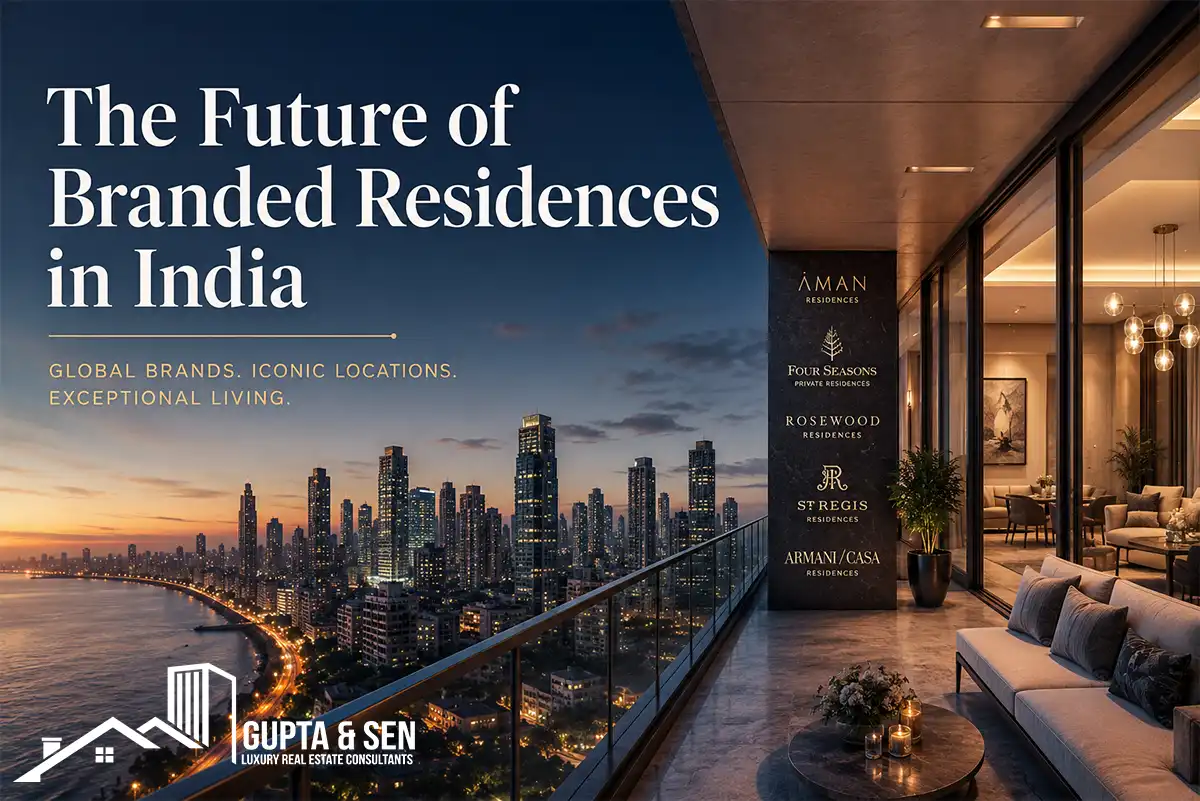
The Future of Branded Residences in India
Which Cities, Brands and Developers Will Lead by 2035?
India has arrived on the world stage of branded residences. From a fledgling segment with just a handful of projects a decade ago, the country now ranks sixth globally in live branded residence projects, contributing 4% of total global supply. This reflects both surging domestic wealth and growing confidence among international luxury brands in the Indian consumer.
This report examines the current landscape of branded residences in India, exploring how the category is defined, why it is growing globally, why India is now ready for this asset class, which brands and developers are active in the market, how India’s leading cities compare as branded residence destinations, and what the future of the sector could look like by 2035.
1. What Is a Branded Residence?
A branded residence is a private home, whether an apartment, villa, or townhouse, that carries the name, design standards, and service protocols of a globally recognised brand. These brands are typically luxury hospitality groups, fashion houses, designers, or lifestyle brands. The brand partner licenses its name and intellectual property to a developer, enabling the developer to command higher pricing, enhance buyer confidence, and accelerate sales absorption. For the buyer, a branded residence offers not just a home, but a lifestyle, prestige, and a globally recognised symbol of success.
The category can broadly be divided into four types:
Hospitality-Branded Residences are the original and most common form of branded residences. Luxury hotel operators such as Four Seasons, Ritz-Carlton, St. Regis, and Taj lend their names and service standards to residential developments. Residents often enjoy hotel-style amenities and services including concierge assistance, housekeeping, valet services, in-residence dining, spa access, and professionally managed operations. Indian examples include Four Seasons Private Residences in Mumbai and Bengaluru, Ritz-Carlton Residences Pune, St. Regis Residences in Lower Parel, Taj Sky View Hotel and Residences Chennai, and Westin Residences Gurugram.
Fashion-Branded Residences represent a newer evolution of the concept, popularised in global markets such as Miami and Dubai before gaining traction in India. In this model, luxury fashion houses contribute their design language, material selections, signature aesthetics, and curated interiors to residential projects. Their involvement is typically focused on design and brand standards rather than operational management. Indian examples include Armani / Casa at World Towers in Mumbai by Lodha Group, Versace Home Residences in New Delhi by Unity Group, and Elie Saab Residences in Gurugram and Noida developed by M3M India and Smartworld.
Design-Branded Residences are driven by globally renowned designers or design studios rather than fashion brands or hospitality operators. The primary value lies in the designer’s creative vision and distinctive aesthetic approach. One of the best-known examples in India is YOO Inspired by Starck, present in both Gurugram and Pune. Co-founded by Philippe Starck and John Hitchcox, YOO represents the design-led end of the branded residence spectrum.
Luxury Lifestyle-Branded Residences are the newest and most diverse category, encompassing luxury automotive brands, watchmakers, jewellers, and other premium lifestyle labels. These developments are designed to reflect the identity and values of the associated brand. Indian examples include Jacob & Co. Residences in Gurugram and Noida by M3M India, marking the entry of the New York-based luxury watch and jewellery brand into Indian real estate. Trump Towers, developed by M3M India and Lodha Group, also falls within this category, combining elements of lifestyle and hospitality branding while serving primarily as an aspirational lifestyle statement for buyers.
The Premium Buyers Pay
Globally, branded residences command a price premium of 30–100% over comparable non-branded luxury properties, depending on the brand, location, and level of service delivery. In India, this premium currently ranges from 20–35% in most markets, rising to 75% in select projects such as the Ritz-Carlton Residences Pune. Capital appreciation on branded residences historically outperforms non-branded luxury by 15–20% annually. Faster absorption rates, stronger resale demand, and the scarcity premium of a limited-unit branded address all contribute to this outperformance.
2. Why Are Branded Residences Growing Globally?
The global branded residences market has expanded from approximately 100 schemes in 2010 to over 910 schemes by end-2025, which is a near tenfold increase in fifteen years. This growth is not a coincidence; it reflects a convergence of forces on both the supply and demand side of the luxury real estate market.
The Global Precedent: Five Markets That Defined the Category
The United States has the world’s largest branded residence market, with the highest concentration in Miami, New York, and Los Angeles. Miami in particular has become the global laboratory for non-hotel brand residences, with projects by Porsche Design, Bentley Design Studio, Aston Martin, and Karl Lagerfeld all delivered or underway. The US market demonstrates that buyers will pay a significant premium, often 40–60%, for a branded address, particularly when the brand communicates an international lifestyle identity.
Dubai has emerged as the most dynamic branded residence market outside the US, with the highest rate of new brand entries globally. Virtually every luxury hospitality brand and an expanding universe of automotive, fashion, and lifestyle names has a residential presence in Dubai. The Dubai market is instructive for India because the buyer profile is similar to globally mobile HNIs and NRIs who treat residence as both a lifestyle choice and an investment asset.
London maintains the world’s highest per-unit price points for branded residences, with developments like One Hyde Park (Mandarin Oriental) and No.1 Grosvenor Square (Four Seasons) setting benchmarks. London proves that in a mature, sophisticated market, the brand premium is sustained over decades rather than merely at launch.
Singapore demonstrates how a relatively compact but extremely wealthy city-state can support multiple top-tier branded residence projects. The Singapore market is characterised by strong Asian HNI demand, a preference for hospitality-managed residences, and a deep understanding of the service delivery model.
Global averages show that branded residences achieve 25–35% higher sale prices than comparable non-branded units, 15–25% higher rental yields, and significantly faster project sell-through times. For international HNI buyers, branded residences also offer superior resale liquidity; they can be bought and sold to a global pool of buyers who understand and value the brand’s proposition.
Why HNIs Prefer Branded Residences
The preference is not purely financial. At the higher wealth tiers, and increasingly at the aspirational tier just below, the decision to purchase a branded residence is as much about identity as it is about investment. A Four Seasons or Ritz-Carlton address communicates a universal language of success that transcends geography. For the globally mobile HNI who owns property in multiple cities, the branded residence offers the assurance of consistent standards wherever in the world they choose to live.
3. Why Is India Suddenly Ready?
India’s readiness for branded residences is not a sudden development; it is the culmination of a decade of wealth creation, urbanisation, aspirational shift, and luxury demand outpacing supply. Several forces have converged to create the current window of exceptional growth.
The HNI and UHNWI Expansion
4. City Scorecard: Where Branded Residences Will Thrive
Not every Indian city is equally positioned to support branded residences. The category requires a specific combination of wealth density, corporate activity, infrastructure quality, international appeal, and luxury market maturity. The scorecard below rates India’s top five cities across seven dimensions on a 1 to 5 scale.
Mumbai leads on current credentials with the highest wealth concentration, the most aspirational luxury real estate market, and the greatest international brand appetite. Per-unit values are the highest in India, and the market can absorb the most ambitious projects.
Delhi NCR is the largest market by scheme count and has the widest geographic spread, including Gurugram and Noida, each having distinct luxury ecosystems. The NCR is also the most active market for non-hospitality branded residences, with fashion, lifestyle, and automotive brands finding strong resonance with Delhi’s aspirational buyer profile.
Bengaluru punches above its current branded residence count on future potential. The city’s tech wealth is the deepest and most self-renewing in India, with a buyer demographic that is globally mobile, highly educated, and highly brand-aware. Bengaluru’s score on future growth potential is the highest of any city.
Hyderabad is the most underestimated major market. Strong GDP growth, a maturing tech wealth base, significant infrastructure investment (including Hyderabad’s world-class international airport), and limited current branded residence supply all point to a potential step-change in the next three to five years. Multiple international brands are evaluating Hyderabad entry.
Pune scores the lowest on current metrics but carries a distinctive advantage: it may offer the best ratio of wealth creation, affordability, and quality of life of any Indian metro. The Ritz-Carlton Residences Pune has already recorded price premiums of up to 75%, the highest in the country, suggesting that Pune’s relatively limited supply of globally credentialled luxury products creates an outsized premium for those that do enter. Pune is the quiet outperformer.
5. The Established Players
India’s branded residences sector has been built on a foundation of global hospitality leaders who tested the market, proved the concept, and are now expanding aggressively.
Four Seasons Private Residences
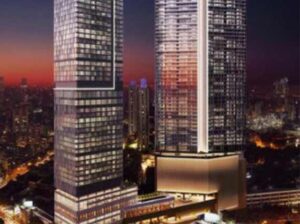
Four Seasons remains the gold standard of branded residences in India. The brand pioneered the category with its Bengaluru project in 2015 and has since delivered one of the most high-profile residential completions in the country. The Mumbai Worli tower, comprising 41 homes across 64 floors, was designed by Gensler with interiors by Yabu Pushelberg and is now operational, with over 80% of units sold as of mid-2025. Units start at Rs 31.71 Cr (2026), with five bedroom and six-bedroom duplexes occupying the upper levels. Three-quarters of all new Four Seasons projects globally now include a residential component, signalling continued expansion in India.
The Ritz-Carlton Residences
The Ritz-Carlton Residences Pune, developed in partnership with Panchshil Realty, represents Marriott International’s premier luxury residential offering in India. Backed by a global portfolio of approximately 300 projects, it has validated the appetite for true five-star serviced living outside Mumbai and Delhi, recording price premiums of up to 75% and setting the template for further Marriott-branded residential expansion in India.
Trump Towers India
Trump-branded residences, developed by M3M India in Gurugram and Noida and by Lodha Group in Mumbai, helped establish the category’s credibility with aspirational buyers. These projects demonstrated that internationally recognised lifestyle brands, not just hospitality operators, could command a premium in India. The Gurugram project on Golf Course Extension Road is considered a flagship asset for the corridor.
Taj Branded Residences (IHCL)
India’s own iconic hospitality brand has entered the category with significant momentum. Its homegrown advantage, cultural resonance, national presence, and deep brand recognition give IHCL a unique positioning. Chennai’s Taj Sky View Hotel and Residences, India’s first Taj-branded residences project, is valued at approximately Rs 2,000 crore and had over 60% of units booked ahead of its targeted December 2027 completion. The project anchors the brand’s residential strategy, alongside developments in Noida through a partnership with Gulshan Group and leisure destinations including Darjeeling, Sikkim, Laichak, and Raichak in collaboration with Ambuja Neotia.
Westin Residences, Armani/Casa, Versace Home, Elie Saab, Jacob & Co., YOO Inspired by Starck and St. Regis
The active and expanding branded residence landscape in India also includes Westin Residences, Armani/Casa, Versace Home, Elie Saab, Jacob & Co., YOO Inspired by Starck, and St. Regis. These brands collectively represent the growing diversity of India’s branded residence ecosystem, spanning hospitality, fashion, design, and luxury lifestyle categories. The broader active player landscape and incoming brand pipeline are discussed in detail in Section 6.
6. Active, Expanding & Incoming Players
7. What Types of Brands Will Enter Next?
The incoming pipeline is where the India branded residence story becomes genuinely fascinating. The market has moved beyond proving the concept; it is now attractive enough to draw brands that have, until recently, focused their residential ambitions on Dubai, Miami, and London.
Ultra-Luxury Hospitality
The most conspicuous absences from India’s current branded residence landscape are the names that define the absolute pinnacle of the global luxury hotel sector. Aman, perhaps the most coveted hospitality brand globally, has long had hotel roots in India through Amanbagh and Amankila. An Aman Residences India launch would be one of the most significant branded residence events the country has witnessed. Rosewood, with its deep-rooted Indian heritage properties in New Delhi and Jaipur, is similarly positioned for residential entry. Six Senses, Waldorf Astoria, Mandarin Oriental, and Fairmont round out the hospitality brands most likely to enter India in the 2026–2030 window, targeting the ultra-premium tier in Mumbai, Delhi NCR, and Bengaluru.
Fashion and Couture
Fendi Casa is the natural next fashion entrant. The brand already has an extensive global residences programme and strong recognition among India’s luxury consumers. Missoni Home brings a distinctly Italian maximalist aesthetic, while Bulgari, having already demonstrated its ability to deliver world-class hospitality through Bulgari Hotels, is an obvious candidate for a branded residence programme in India. All three possess the brand equity, design infrastructure, and global residential track record required for a successful entry into the Indian market.
Automotive
The automotive branded residence category, pioneered globally in Dubai and Miami, is beginning its India journey. Tonino Lamborghini’s RERA-registered project in Gurugram is the first confirmed entry. Bugatti Residences, already launched in Dubai, along with Bentley Home and Mercedes-Benz Places, have established global residential programmes and are likely to evaluate India as the country’s UHNWI base expands. Porsche Design, already present in India’s automotive and lifestyle retail market, and Aston Martin Residences complete the automotive pipeline most likely to reach India before 2030.
Why This Matters
The diversity of incoming brands matters as much as their individual prestige. A market where Aman, Bugatti, Fendi Casa, and Waldorf Astoria are all present is fundamentally different — more mature, more competitive, and more sophisticated in its buyer profile — than one anchored by a handful of hotel brands. India is approaching that inflection point.
8. Micro-Markets: Where Future Projects Will Be Built
The branded residence map of India is not simply a city-by-city story. Within each city, a handful of micro-markets carry the infrastructure quality, HNI residential density, commercial adjacency, and scarcity premium required to support a globally branded project.
Mumbai
Worli is already established as Mumbai’s premier branded residence corridor, anchored by Four Seasons and supported by a strong development pipeline. Bandra and BKC offer the combination of corporate adjacency — BKC being home to India’s major financial institutions and numerous multinational headquarters — and a well-established affluent residential base. Tardeo and Malabar Hill carry old-money prestige and genuine land scarcity, a combination particularly attractive to brands such as Aman or Rosewood that require a contextually meaningful address. Lower Parel, anchored by St. Regis, remains an active branded residence market.
Delhi NCR
Golf Course Road and Golf Course Extension Road in Gurugram are already the most densely branded residential corridors outside Mumbai, with Trump, Elie Saab, Jacob & Co., and the incoming Tonino Lamborghini projects clustered within this micro-market. SPR Road (Sohna Peripheral Road) represents the next frontier corridor, where both Westin Residences and Tonino Lamborghini are positioned. Noida Expressway, home to Elie Saab by Smartworld in Sector 98 and Jacob & Co. by M3M in Sector 97, is establishing itself as NCR’s second branded residence cluster.
Bengaluru
Bengaluru’s branded residence geography is more dispersed than that of Mumbai or NCR. Whitefield, driven by IT campus wealth, is currently the most active demand generator. The CBD, particularly the MG Road and Vittal Mallya Road corridor, carries the prestige and density required by top-tier luxury brands. Indiranagar, Bengaluru’s most cosmopolitan micro-market, is emerging as another strong candidate. The city’s branded residence pipeline is expected to deepen significantly between 2026 and 2029 as IT wealth matures and HNI density continues to increase.
Hyderabad
HITEC City and theb represent Hyderabad’s equivalent of BKC, serving as the corporate core where technology-sector wealth is most concentrated. The Kokapet and Nanakramguda corridors, benefiting from proximity to HITEC City and improving infrastructure, are the most likely locations for the first wave of branded residence developments.
Pune
Koregaon Park remains Pune’s most prestigious address and the natural home for the city’s first generation of internationally branded residences. Boat Club Road carries similar prestige and exclusivity. Kalyani Nagar and Baner are emerging as the micro-markets where IT and startup wealth is most concentrated. While less established than Koregaon Park, they offer the land availability, infrastructure growth, and developer interest that the city’s traditional luxury neighbourhoods increasingly lack.
9. Developer Scorecard: Who Is Best Positioned?
The branded residence category is ultimately only as strong as the developers who execute it. A global brand’s name on a project is a promise; the developer’s capability and integrity determine whether that promise is kept.
Methodology: Developer Scorecard
The scorecard rates eleven developers across four criteria, each scored on a scale of 1–5, for a maximum score of 20. The scoring is qualitative and comparative, based on public project data, sales performance, and Gupta & Sen’s sector observations. It is not an audited or quantitative model. Rather, it is intended as a directional tool for assessing brand-developer fit, not as a precise rating system.
The Four Criteria
Luxury Land Bank Quality
This measures the extent of a developer’s holdings within micro-markets capable of supporting an internationally branded project (see Section 8). A score of 5 indicates multiple parcels in tier-one luxury locations, while a score of 3 reflects strong but not flagship holdings. Scores of 1–2 indicate limited luxury-grade land inventory.
HNI & UHNI Client Relationships
This evaluates the depth of a developer’s relationships with the branded-residence buyer base, inferred from the sell-through performance of previous premium projects and overall industry reputation. A score of 5 indicates that the developer’s name alone attracts significant HNI interest, while lower scores reflect developers still building credibility beyond their core markets.
Execution Track Record
This assesses construction quality, timeline adherence, and the absence of major delivery failures or litigation. It is directly linked to the delivery and credibility risks discussed in Section 11, as branded projects amplify the reputational and financial consequences of delays or quality issues.
International Brand Partnership History
This criterion measures a developer’s demonstrated experience in structuring and executing licensing agreements with global brands. A score of 5 indicates at least one live or completed branded residence project, while scores of 2–3 reflect developers with strong international relationships but no established branded residence track record.
Process & Limitations
Each developer was scored independently and consistently across the cohort, with all four criteria weighted equally, since weakness in any one area can be disqualifying regardless of strength elsewhere. This is a relative assessment tool reflecting market conditions as of June 2026, not an audited rating, as it excludes non-public financial data and can change rapidly following a major project launch, acquisition, or brand partnership announcement. It should therefore be treated as a starting point for due diligence rather than a substitute for it.
The scorecard below assesses India’s leading developers across four dimensions: luxury land bank quality, existing HNI client relationships, execution track record, and international brand partnership history.
10. Key Drivers: A Structured View
11. Challenges and Considerations
Delivery credibility remains the single most important risk factor. Branded residences depend fundamentally on brand trust, and any delivery delay or quality shortfall carries a disproportionate reputational cost for both the developer and the brand partner. India’s luxury real estate sector has a history of delays, and as the category scales, the tolerance for underperformance is likely to decrease.
Brand Proliferation Risk
Brand proliferation is a genuine concern. As more brands enter more cities, the premium attached to any individual branded address may begin to compress in markets where multiple comparable offerings compete. Not every brand will command a meaningful premium in every location. The fit between brand, city, and developer will become increasingly important in determining long-term investment outcomes.
Legal and Regulatory Framework
RERA compliance and clear title structures are non-negotiable, particularly for NRI buyers who often apply the same level of scrutiny they would to a purchase in Dubai or Singapore. The emerging SEBI SM REIT framework is beginning to facilitate institutional capital participation in the sector, bringing greater discipline, transparency, and professionalism to the market.
Service Delivery at Scale
Delivering on the brand promise requires a substantial pool of trained hospitality talent. Maintaining consistent four-star and five-star service standards within a residential setting becomes significantly more challenging as the number of managed units grows from hundreds to thousands. This remains a genuine operational challenge that the industry has not yet fully addressed.
Price Discovery in Emerging Markets
In newer markets such as Chennai, Hyderabad, and emerging NCR corridors, price discovery for branded residences is still evolving. Early buyers assume greater risk, but they also stand to benefit from the highest potential upside as these markets mature.
12. Forecast to 2035
Where the Market Stands Today
India currently has 34+ operational and planned branded residence schemes, concentrated in Mumbai, Delhi NCR, Bengaluru, and Pune, with an early-stage presence in Chennai and select leisure destinations.
Three Scenarios for 2035
Conservative Scenario: India adds 40–50 new schemes by 2035, reaching a total of 75–85 projects. Growth is led primarily by existing brands expanding their presence, alongside a moderate number of new entrants. Mumbai and NCR continue to dominate the market. Total residential value reaches approximately $1.5–2 billion.
Moderate Scenario: India adds 70 – 90 new schemes by 2035, reaching a total of 105 – 125 projects. Multiple new hospitality brands, including Aman, Rosewood, Six Senses, and Waldorf Astoria, enter the market. Fashion and automotive brands expand significantly. Hyderabad and Bengaluru emerge as major branded residence destinations. Total residential value reaches approximately $3–4 billion, and India rises from sixth to third place globally.
Optimistic Scenario: India adds 100–130 new schemes by 2035, reaching a total of 135–165 projects. India becomes the world’s second-largest branded residence market by scheme count, behind only the United States. All major global luxury hospitality, fashion, and automotive brands establish a presence in the country. The geographic footprint expands to include Ahmedabad, Kochi, Goa, and premium leisure destinations in Himachal Pradesh. Total residential value exceeds $5 billion.
The moderate scenario represents the base case. It is supported by the projected 50% growth in India’s ultra-HNI population by 2028, continued acceleration in NRI participation, a pipeline of confirmed brand entrants, and infrastructure improvements that are expanding the viable geography for branded residences.
The optimistic scenario is achievable if India’s equity markets and startup ecosystem continue generating wealth at current rates, and if two or three anchor ultra-luxury brand entries — Aman being the most consequential — act as catalysts for further brand confidence and market expansion.
Wealth Drivers Supporting the Forecast
The structural underpinning of the optimistic-to-moderate scenario rests on five wealth creation engines: IT sector expansion and software services; startup ecosystem wealth, with India’s unicorn count continuing to grow and creating a new cohort of founder wealth with every funding cycle; financial services and capital markets gains, supported by one of the world’s best-performing equity markets over the past decade; business family generational wealth transfers; and NRI remittances and India-bound investment.
Collectively, these five engines suggest that India’s HNI and UHNWI population will continue to expand at a rate that outpaces the global average well into the 2030s.
13. The Contrarian Case — Why Branded Residences Could Disappoint
A growth thesis is only credible if it survives its own counter-arguments. Three risks deserve serious consideration alongside the bullish outlook presented in this report.
Risk 1: Oversupply Is Already Visible at the Corridor Level
Aggregate India-wide numbers may still suggest an undersupplied market, but branded residences are increasingly clustering within a small number of micro-markets. Golf Course Extension Road and SPR Road in Gurugram already host Trump, Elie Saab, Jacob & Co., and Westin-branded projects within a relatively short distance of one another. Worli in Mumbai is beginning to exhibit similar characteristics. When several branded developments compete for the same buyer pool within the same corridor, the category’s core promise of scarcity begins to weaken.
The current wave of announcements may, in some cases, reflect developers rushing to secure a brand partnership before competitors do, rather than responding to genuine end-user demand. NCR, with the highest scheme count and the largest pipeline of incoming brands, appears particularly exposed to this risk.
Risk 2: Hospitality Brands Risk Diluting the Asset That Makes Them Valuable
The premium commanded by hospitality-branded residences is built upon decades of accumulated trust in hotel service standards. That trust does not scale indefinitely. Marriott alone licenses brands such as Ritz-Carlton, Westin, and St. Regis across approximately 300 residential projects globally. Each new project benefits from the brand’s reputation, while the majority of delivery risk remains with the developer rather than the operator.
A handful of highly visible failures anywhere within a global portfolio could undermine residential credibility across multiple markets, including India, where many buyers are still relatively new to the branded residence concept and may not always distinguish between a strong developer and a weak one.
Risk 3: Will Buyers Continue Paying a Premium When Every Project Has a Brand Attached?
This is perhaps the most important question facing the sector. A decade ago, a brand name signalled genuine exclusivity and exceptionalism. Today, fashion houses, watchmakers, automotive brands, and lifestyle labels are entering the market alongside traditional hospitality operators. As a result, “branded” is increasingly becoming a standard feature of premium real estate rather than a true differentiator.
Basic economic principles suggest that premiums should compress as branded supply grows relative to genuinely scarce, world-class offerings. India’s current premium of 20–35% already sits below the 30–100% premium observed in more mature branded residence markets such as Dubai and the United States. This may represent a warning signal rather than untapped upside.
As buyers become more experienced and observe projects through an entire development cycle, they are likely to place greater emphasis on execution quality, delivery timelines, and developer reputation rather than relying solely on the brand name. Over time, value may shift back toward real estate fundamentals and away from branding alone.
Why This Matters for the Forecast
None of these risks invalidate the broader growth story. India’s wealth creation trajectory remains compelling, and city-level supply constraints in markets such as Hyderabad and Pune remain very real. However, they suggest that the future is more likely to be characterised by market bifurcation rather than uniform premium growth.
A smaller group of well-located, well-executed, and carefully branded developments is likely to continue commanding strong premiums, while opportunistically branded projects may see premiums compress toward non-branded luxury benchmarks.
For developers and brand partners, the conclusion becomes more nuanced. The message is no longer simply “enter India.” It is “enter selectively.” Being branded alone will not be enough. Increasingly, sustained premiums will depend on being well-branded, well-located, and well-built.
14. Gupta & Sen Insight: Our Perspective
Which Indian Cities Will Dominate Branded Residences by 2035?
Our ranking, in order of confidence:
1. Mumbai
Unassailable. The highest per-unit values, the deepest HNI concentration, the greatest scarcity of land in premium micro-markets, and the most sophisticated international brand appetite of any Indian city. Mumbai will remain the flagship market for the most ambitious branded residence projects.
2. Delhi NCR
The largest market by scheme count and the most active for non-hospitality brand collaborations. NCR’s breadth, covering both Gurugram and Noida, gives it a diversity of price points and brand categories that no other Indian market can match.
3. Bengaluru
The highest future growth potential of any Indian city. Bengaluru’s tech wealth is self-renewing and globally mobile, exactly the buyer profile that branded residences require. The city is currently underrepresented relative to its wealth base, which means the upside for incoming brands remains substantial.
4. Hyderabad
The market most likely to surprise. Strong infrastructure, a maturing technology-driven wealth base, genuine scarcity of globally credentialled luxury supply, and improving international connectivity all point towards Hyderabad making a significant move during the 2027–2032 period.
5. Pune
The most interesting market to watch on a risk-adjusted basis.
Which Developers Are Most Likely to Secure Future Global Brand Partnerships?
Our assessment points to Lodha Group for Mumbai’s ultra-luxury segment, DLF for landmark-scale projects in NCR, Prestige Group for Bengaluru, Panchshil Realty for Pune, and an emerging partnership between an established hospitality brand and a land-rich local developer in Hyderabad.
The single most consequential development in India’s branded residence market over the next five years may be DLF partnering with one of the world’s remaining ultra-luxury hospitality brands such as Aman, Rosewood, or Six Senses for a project in Delhi NCR or Chandigarh. When it happens, it is likely to redefine expectations for the category.
The Broader Conclusion
Branded residences in India are no longer a novelty. They are a proven asset class with demonstrated pricing premiums, faster sales absorption, and stronger capital appreciation than comparable non-branded luxury developments. The question is no longer whether the Indian market can support branded residences. The real question is which brands, in which cities, and with which developers will capture the next wave of one of the world’s fastest-growing luxury consumer bases.
The future is not merely bright. It is exceptionally well illuminated!
This report has been prepared by Gupta & Sen for informational purposes only. Information has been drawn from publicly available sources and other industry reports available as of June 2026. Readers should conduct their own independent due diligence before making any investment decisions.

- Inside Rustomjee’s Premium Portfolio: How the Developer Is Redefining Luxury Living in Mumbai - July 19, 2026
- Inside Lotus Developers Luxury Coastline Collection - July 7, 2026
- The Future of Branded Residences in India - June 23, 2026