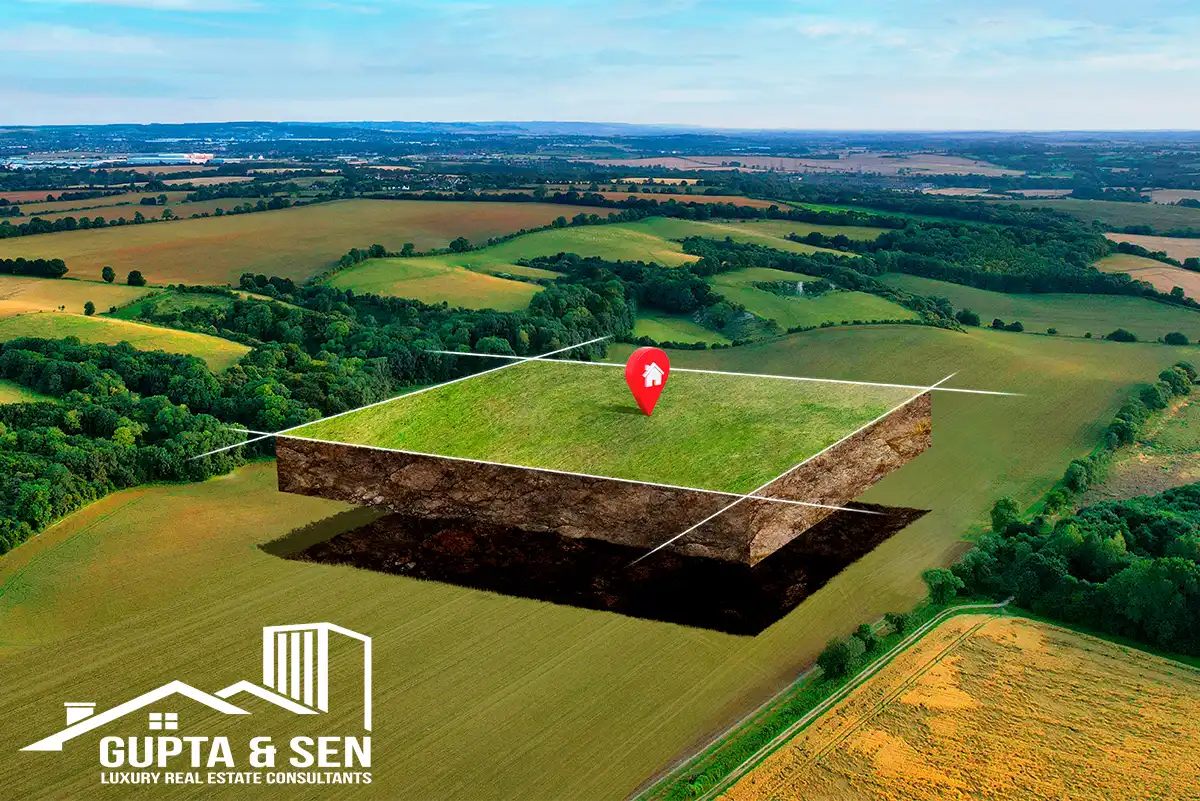
For some, a second home doubles as a retreat; for others, the dream is far more personal — a second home built from the ground up, tailored entirely to their vision. It begins with choosing the right location, acquiring the perfect plot of land, and then designing a home that reflects their lifestyle, or at the very least, commissioning one that feels uniquely their own.
Does that resonate with you? Is there a part of you that leans toward independence—the kind that hums along to the idea of doing things your way?
One of the enduring truths about land is its finite nature. As the saying goes, they’re not making any more of it! Land in vacation areas, in particular, is a potential gold mine, we all know and believe. They are certainly not making any more oceans or mountains. Manmade lakes like Pawna lake near Pune can still crop up, but eventually there wont be any more land left to buy there too and in and around desirable vacation settings all over India.
THE GOOD EARTH
If you’ve ever travelled across India — whether by flight or train — you’ve likely noticed just how vast the stretches of open land can be. It often feels endless.
However, much of this land isn’t suitable for living or development. When you begin your search for a plot, you will quickly realise there’s a significant difference between land that is truly usable and land that isn’t. The key is identifying the right parcel — one that aligns with both your vision and practical requirements.
“There is a certain reassurance in knowing the ground beneath you is yours. Land remains one of the few assets that cannot simply vanish.” — Anthony Trollope
Heres how to choose just the right spot for your vacation home:
Buy land now only if you plan to build a home on that site fairly soon. Land is an illiquid investment — it is difficult to sell if you need cash in a hurry, tougher than selling a home. Also, if you plan to hold a piece of vacant land a number of years before building — maybe you plan to build a retirement place eventually — many things can arise to keep you from realizing your dream home there.
Environmental considerations have become a major—almost unavoidable—factor when buying land today. In many vacation destinations, large portions of land are now protected, not just from excessive development but, in some cases, from any construction whatsoever. Before committing to a purchase, it’s essential to study environmental regulations at both the state and local levels in the area you’re considering.
In India, this is especially critical due to strict environmental frameworks. For instance, Coastal Regulation Zone (CRZ) laws restrict construction within a specified distance from the sea, often limiting or completely prohibiting development in ecologically sensitive coastal stretches. Similarly, forest land, eco-sensitive zones, and areas near water bodies may fall under regulations that severely restrict usage.
It’s equally important to understand future government plans. Authorities may earmark land for “land banks,” conservation zones, or public infrastructure, and could impose temporary or long-term moratoriums on construction. This means you might find that land in your preferred location is either unavailable for purchase or, more concerning, that land you’ve already bought cannot be developed when you’re ready to build.
Restrictions on development don’t come only from policy decisions. In many second-home and vacation communities, local residents are increasingly organizing to limit further growth. Their concern is that rapid development puts pressure on existing infrastructure — such as roads, water supply, and public services. As a result, these influential groups often lobby local authorities to slow or cap expansion, which can directly impact your ability to build or alter your property in the future. Simple example – Shah Rukh Khan or Kumar Mangalam Birla will not want the area around their vacation homes in say Alibaug or Karjat to be sold in the open market for privacy reasons. Atleast for the forseaable future. Even if you do buy a plot you may realise that your influential neighbours have lobbied against you with the authorities higher up and you realise that you cannot build your dream villa there anymore! Such things have been known to happen.
Because vacation destinations are so sought-after, it’s important to closely review the town’s master plan before buying land. Pay particular attention to proposed infrastructure developments — such as new roads or the expansion of existing ones. The last thing you want is to invest in a plot that is later acquired by the government for road projects.
It’s equally important to consider how the surrounding area might evolve. A peaceful, scenic setting today could change quickly — you wouldn’t want a commercial complex or a shopping mall coming up just behind your tranquil getaway a few years after you’ve settled in.
Make sure you clearly understand the zoning regulations in the area and what types of developments are permitted nearby. As the location grows and attracts more interest, knowing what could be built around you in the future will help you avoid unpleasant surprises and protect the long-term value of your investment.
Don’t overlook basic utilities. Check whether the plot is connected to municipal water supply and sewage systems. If it isn’t, you’ll need to make provisions for alternatives such as a private well and a septic tank.
Is the land actually suitable for building a home? Does it meet local zoning requirements, and is the plot size adequate for residential construction?
This is a critical consideration. It’s easy to get carried away and purchase what appears to be the perfect piece of land in a desirable vacation location — but before doing so, you must ensure that construction will be permitted when you’re ready. Nothing could be more frustrating than discovering later that you’re unable to build — not just the home you envisioned, but any home at all — because the plot doesn’t meet minimum size or regulatory requirements.
Make sure the land has a clear and marketable title, with no legal disputes or encumbrances. In India, it’s equally important to verify that the land has been officially converted from agricultural to non-agricultural (NA) use if you intend to build a home. While agricultural land can still be purchased, it typically requires the buyer to hold a valid farmer status or licence, depending on state regulations.
Above all, engage a competent real estate lawyer before finalising any purchase. Proper legal due diligence at this stage can help you avoid costly complications down the line.
THE NEW-HOME DEVELOPMENT
You come across a new development in a scenic area close to your city — something like “Whispering Woods”—and are immediately drawn to its promise. The plan includes around 65 independent villas, along with amenities such as a swimming pool and tennis courts. But at the moment, all you see is a sample villa, a sales office, and perhaps a couple of homes under construction. The question is: should you invest in a plot here?
One clear advantage is pricing. Early-stage developments during the launch phase often offer attractive land rates, especially for plots being launched in phases. In some cases, the developer may even offer financing — something that’s relatively uncommon for land purchases. If the project takes off as planned, both land and home values are likely to appreciate, leaving you with a well-priced early investment.
However, there’s another side to consider. If the development fails to gain traction or the developer runs into financial trouble, construction may stall — particularly in the future phases where your plot might be located. Promised amenities like the clubhouse, pool, or tennis courts may never materialise, leaving you with an isolated plot in an incomplete project.
To minimise this risk, it’s essential to thoroughly evaluate the developer before committing. Check their track record — specially within that specific region. Look into other projects they’ve completed, and find out whether there have been complaints from buyers or landowners. You can often verify this through consumer forums online or regulatory authorities. Doing this groundwork upfront can help you avoid getting stuck in an underdeveloped or abandoned project.
TALKING MONEY
Your plot could cost ₹40 lakhs or ₹5 crore — largely depending on that all-important factor: location. In general, the more road frontage a parcel has, and the more developed the surrounding infrastructure already is, the higher its value. On the flip side, land that requires significant development — such as clearing, levelling, adding utilities, or even building access roads — may come at a lower purchase price, but you’ll need to account for these additional costs or the longer time that it will take the developer to build the surrounding infrastructure.
When it comes to negotiating, land transactions work a bit differently from buying a home. For larger plots, it’s wise to engage an appraiser. If the valuation comes in well below the seller’s asking price, it can strengthen your position and help justify a lower offer. Also remember to factor in ongoing costs such as property taxes, insurance, and interest on any loan before entering negotiations.
Do not rush into making an offer until you’re confident the land meets all key criteria — no environmental or regulatory restrictions, sufficient plot size for construction, and clear usability as a homesite.
Typically, vacant land purchases are done with your own investments and savings, although some sellers may offer financing. In recent times, certain banks have also started providing loans for land — especially if the buyer can demonstrate intent to build, such as having a contractor or builder in place. Consulting mortgage brokers can also help you identify lenders who specialise in such financing.
Ultimately, your success in negotiating the right price — and securing favourable financing, if needed — will depend on how motivated the seller is. While this holds true for most real estate transactions, it becomes particularly relevant when dealing with highly desirable vacation land, where sellers may be less willing to offer concessions.
A Familiar Refrain
As emphasized throughout, it’s crucial to keep resale value in mind when purchasing any real estate—whether it’s vacant land or the home you eventually build on it. Opt for a property that will have broad appeal to future buyers, ensuring that when the time comes to sell, you can do so smoothly and without difficulty.
BUILDING A HOME ON YOUR LAND
Once you’ve secured the land, the natural next step is to start building your vacation home without much delay.
At this stage, you’ll have several options. You may choose to go with a custom, architect-designed home — perhaps one you’ve envisioned for years. If so, it’s worth considering an architect who is familiar with the local area, whether the site is relatively nearby or several hundred miles away from your primary residence. A local architect (lets say an architect familiar with building coastal homes for constructing a villa in Alibaug rather than an architect who mainly works in building homes in the interiors or mountainous areas) brings valuable insights into soil conditions, climate patterns, and other practical factors that can significantly influence design and construction — details that someone unfamiliar with the region might easily overlook.
Keep in Mind
Not every piece of land holds real value. Do your due diligence to distinguish truly worthwhile plots from those that may not be a good investment.
Avoid purchasing land in a new plotted development too many years in advance of when you plan to build. Over time, circumstances around the property can change — and not always in your favour.
Always know the FSI of the plot you are buying and confirm that construction is permitted on the plot you are considering.
Do not miss a single article!
Submit your email id to get new articles directly into your email inbox!
Chloe is a real estate advisor with Gupta & Sen. With a combined experience of over 15 years in varied industries, she is a vocal and knowledgeable ally for buyers and investors who want to make informed choices when buying a property in India. With superlative communication and marketing skills, Chloe handles our PR, real estate marketing strategy and client management.